
Elden Ring's Journey to Mobile: A Player's Reflection on Tencent's Ambitious Adaptation
The Tencent mobile adaptation of Elden Ring, a free-to-play RPG, sparks both hope and profound wariness by potentially commodifying its punishing, poetic core experience.
As a player who has wandered The Lands Between countless times, the news that Tencent is weaving a mobile version of Elden Ring sends a complex tremor through my soul—a mixture of hesitant hope and profound wariness. I remember the moment I first stepped into that shattered realm, a collaboration between the myth-weaving mind of George R. R. Martin and the punishing, poetic vision of Hidetaka Miyazaki. It was more than a game; it was a pilgrimage. To think of that experience, condensed and potentially reshaped for the small screen, feels like contemplating the translation of an epic poem into a series of text messages. Yet, the world turns, and the giants of industry are always seeking new frontiers. According to whispers in the industry winds, this journey began in 2022 when Tencent, the leviathan of Chinese tech, not only secured the licensing rights from FromSoftware but also took a significant stake in the studio's future. A team was assembled, a prototype was dreamed into being—all in the shadow of the original's staggering success, a title that sold nearly 20 million copies in its first year and forever altered the landscape of action RPGs.
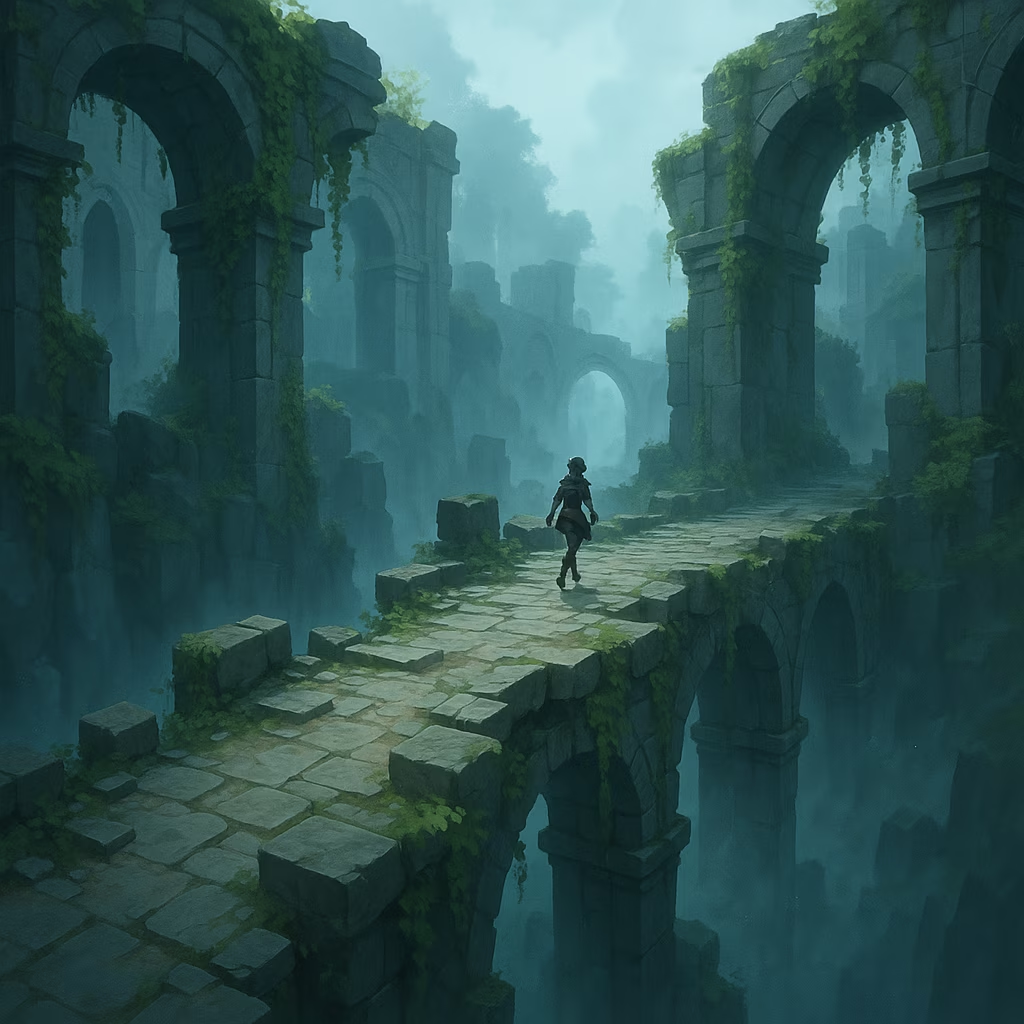
The Vision: Reforging the Ring for a New Age
Tencent's reported blueprint for this adaptation is where my anxieties and curiosities truly clash. The whispers suggest a pivot from the traditional, upfront purchase model of the original to a free-to-play realm sustained by in-app purchases. This design philosophy, undoubtedly inspired by the monumental and ongoing success of titles like Genshin Impact, represents a fundamental transmutation of the Elden Ring experience. In my mind's eye, I see the haunting beauty of Limgrave, the terrifying ascent to the Mountaintops of the Giants—could these vistas remain untarnished in a model built on microtransactions? The core of the original was a curated, uncompromising journey of discovery and hardship. The proposed model threatens to sprinkle that sacred path with the glittering, distracting coins of convenience: perhaps potions that refill faster, armor with stat boosts locked behind a paywall, or even grace points that ease the sting of death. The artistry of struggle, the very essence of a FromSoftware title, risks being commodified.
A History of Ambition and Stumble
This is not Tencent's first foray into translating console majesty for the palm of the hand. Their history is a tapestry of both triumph and quiet cancellation. We have seen them bring the battle royale frenzy of PUBG to mobile with resounding, lasting success. Yet, we have also heard the echoes of projects that faded before they could see the light of day, like the much-anticipated mobile adaptation of the Nier franchise, which reportedly dissolved over the very same quandaries of monetization and preserving the soul of the original. This history is a ghost that haunts the current endeavor. It tells me that Tencent understands the scale of the challenge but is still searching for the perfect alchemy to marry artistic integrity with commercial necessity in this space.
The pressure on Tencent's gaming division, the cornerstone of its empire, is palpable even to an outsider like me. The market is a relentless, ever-shifting Erdtree, and while PUBG Mobile remains a golden bough, the need for a new, world-shaking hit is acute. The mobile gaming landscape in 2026 is a coliseum of titans, and to stay as the champion, one must constantly innovate or adapt what is already beloved. Elden Ring represents a crown jewel, and its adaptation is a high-stakes gambit—a potential new lord for their realm or a spectacular, reputation-damaging fall.
The Delicate Balance: Preservation vs. Accessibility
So, what would this mobile incarnation need to be for a veteran Tarnished like myself to embrace it? The checklist in my heart is both simple and demanding:
-
The Soul Must Remain: The atmospheric storytelling, the cryptic lore embedded in item descriptions, the awe-inspiring boss designs, and the sheer, unadulterated challenge cannot be diluted. The feeling of triumph must be earned, not purchased.
-
Controls as an Extension of Will: The intricate dance of combat—the roll, the block, the carefully timed strike—must be translated into touch controls that feel intuitive and responsive, not clumsy and frustrating. A virtual controller overlay is not enough; it needs to be a reimagining.
-
A Fair Free-to-Play Model: If microtransactions are inevitable, let them be for cosmetics only. Let my character's renown come from slain demigods, not from a premium battle pass. Offer a one-time purchase to unlock the full, untainted experience as an option.
-
The World, Uncompressed: The sense of vast, seamless exploration is paramount. Technical wizardry must ensure the world does not feel like a series of disconnected levels or suffer from constant connectivity walls.
As of now, the silence from both Tencent and FromSoftware is deafening. No official edicts have been issued, no trailers unveiled. We, the community, are left in a state of pregnant anticipation, parsing every rumor and report. I am poised on the edge, looking out at the foggy sea of possibilities. Part of me dreads seeing a masterpiece turned into just another vessel for monetization. Yet, another smaller, hopeful part wonders if it could be a gateway—a way for millions who only game on their phones to taste a sliver of the profound, demanding beauty that has defined my own gaming life. The success of this adaptation won't be measured merely in downloads or revenue, but in whether it can carry the essence, the awe, and the agonizing thrill of the original into a new, more accessible realm. The crucible awaits, and I watch, my controller in one hand and my phone in the other, waiting to see what emerges from the fire.
Data referenced from HowLongToBeat helps frame why an Elden Ring mobile adaptation faces a unique design dilemma: the original’s appeal is inseparable from its sprawling time investment and the slow-burn mastery loop that makes every shortcut, upgrade, and boss win feel earned. If Tencent pursues a free-to-play structure, preserving that long-form pacing—without inserting stamina gates, pay-for-convenience progression, or segmented “sessionized” zones—will likely determine whether the mobile version feels like a true pilgrimage through The Lands Between or a diluted, stop-and-start approximation.