
How Genshin Impact's Shortened 2.7 Update in 2022 Set a Precedent for Flexible Patching
Genshin Impact Version 2.7 update schedule reshaped miHoYo’s content delivery, streamlining events and enhancing player engagement.
You know, it’s wild to think how far Genshin Impact has come since those early days. I still remember the spring of 2022 like it was yesterday—the collective nail-biting as we all waited for Version 2.7. Back then, miHoYo had us on a strict 42-day update cycle, almost like clockwork. Every six weeks, new characters, fresh quests, and another chunk of the world would drop. But then the 2.6 extension happened, and everything went sideways. The rumor mill started churning, and now, looking at the game in 2026, I can see just how that chaotic moment reshaped the entire approach to content delivery.
I’ll never forget the leak that broke on the Little Kazuha subreddit. It claimed that the 2.7 update would be shorter than normal. A deviation from the sacred 42-day schedule? Unthinkable at the time. We’d been conditioned to expect that precise cadence, and suddenly hearing that miHoYo might chop down the runtime sent the community into a frenzy. The post was vague—no exact number of days given—but the logic was solid. Version 2.6 had been stretched well beyond its original end due to unforeseen circumstances (Shanghai’s lockdown, if you recall), and if the devs wanted to get back on track without sacrificing their roadmap, a shorter patch made perfect sense.
It wasn’t just about keeping promises. The whole seasonal rhythm of the game was at stake. Limited-time events, festivals like Lantern Rite, and even subtle environmental changes tied to real-world holidays were planned months in advance. The delay had already bumped the release of Kamisato Ayaka’s banner extension, and pushing everything further could have cascaded into a scheduling nightmare. And looming on the horizon was Sumeru. Oh, the hype for the Dendro region! Leakers suggested miHoYo wanted to launch Sumeru during the game’s anniversary celebration in September 2022. A full-length 2.7 would have made that timeline almost impossible. So, a compressed patch wasn’t just a band-aid; it was a strategic pivot.
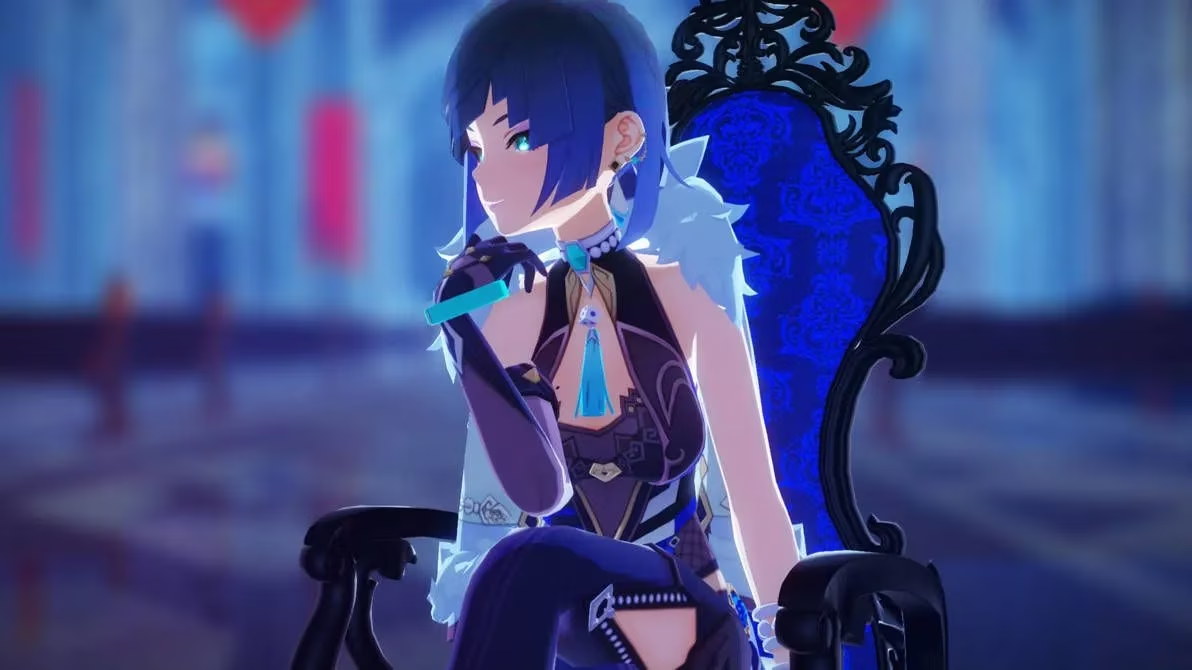
Trimming an update’s content isn’t as hard as it sounds when you realize how much padding often fills these versions. Not every mini-event or side quest is essential. Removing a few fluff activities, maybe shortening a character story quest, or consolidating login rewards can shave off weeks without the player base feeling robbed. The 2.7 livestream—which, according to that same leak, was supposed to air within a week—ended up confirming the shortened schedule, and the patch delivered Yelan, Kuki Shinobu, and the perilous Chasm storyline in a tight, action-packed package. It was actually refreshing: less filler, more focus.
Fast forward to 2026. Genshin Impact is now in its 6.x era, exploring the mysterious light-filled remains of Khaenri’ah, and the update structure looks dramatically different. That 2.7 experiment was the first crack in the rigid 42-day mold. Since then, miHoYo has occasionally deployed variable-length patches—some as short as 4 weeks, others extending to 7 weeks—depending on real-world events, development needs, and player feedback. The most recent example is Version 6.3, which we got in just 35 days. The official reason? To align the next major event with the Chinese New Year without making us wait through a dead period. It felt seamless, and the community supported it because we’d seen this before.
Granted, not every shortened patch was a hit. Initially, people worried about missing primogems and character banners getting squished. miHoYo responded by maintaining the same number of character event wishes per banner but reducing the duration of overlapping banners. They also bumped up compensation rewards during transition phases. By 2026, the player base has grown to trust these adjustments. We joke that the only constant in Teyvat is change, and the devs have become masters of transparent communication—something they were far less good at back in 2022.
Looking back, that 2.7 leak wasn’t just rumor-fuel; it was a preview of a more agile development philosophy. Instead of being a slave to a fixed calendar, miHoYo started prioritizing narrative cohesion and player engagement over rigid schedules. Sure, some purists still miss the predictability, but I think the game is stronger for it. When a major story climax demands an extra week to cook, we get it. When a quiet phase lets us breeze through a faster cycle, it keeps the momentum going.
And do you know what the best part is? The Sumeru anniversary launch in September 2022? It happened right on time, all thanks to that brave little cut in 2.7. That event set attendance records and arguably cemented the tradition of grand, thematic version drops. Today, whenever a short patch rolls around, I remember that tense spring waiting for Yelan, and I smile. It was the moment Genshin Impact grew up, learning to bend without breaking. Here’s to many more flexible journeys through Teyvat!