
The Niwa Clan's Secrets in Genshin Impact: From Kazuha to Scaramouche
The hidden lore of Niwa in Genshin Impact connects Kaedehara Kazuha to the fallen Raiden Gokaden bladesmithing schools.
If you dove into Genshin Impact’s Version 2.6 flagship event, Hues of the Violet Garden, you probably walked away with more questions than answers about a name that kept echoing through the cutscenes: Niwa. The final flashback sent lore enthusiasts scrambling to piece together how this mysterious name connects to the wandering samurai poet, Kaedehara Kazuha. But here’s the kicker—Niwa isn’t just some forgotten NPC. It’s a key that unlocks a much larger story spanning Inazuma’s lost arts, a vengeful puppet, and one of the most tragic family sagas in Teyvat.
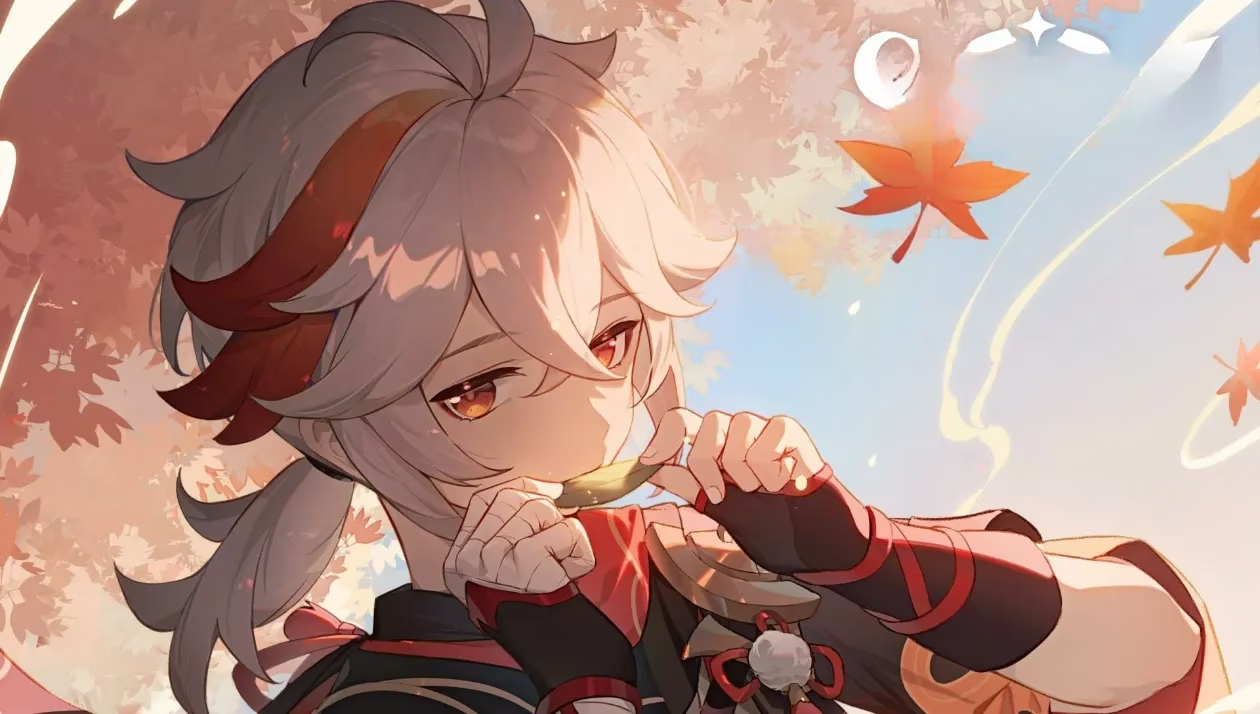
So, who—or what—is Niwa? Let’s clear that up right away: Niwa is not a single person. It’s a family name, a lineage that once held prestige and power in the world of Inazuman bladesmithing. Anyone who’s paid attention to Kazuha’s character stories already knew his clan wasn’t always called Kaedehara. The event finally confirmed that Kazuha’s great-grandfather, Kaedehara Yoshinori, was originally born into the Niwa family. After his father, an unnamed Niwa, vanished under unclear circumstances, young Yoshinori was adopted into the Kaedehara household. Can you imagine the identity crisis that must have brewed over the generations? That single adoption essentially merged two fading bloodlines, and the truth simmered beneath layers of shame and secrets until the Traveler helped unearth it.
But why does any of this matter beyond Kazuha’s personal backstory? Because the Niwa name doesn’t just appear once in the annals of Inazuma. There’s another prominent figure: Niwa Nagamitsu. And Nagamitsu’s tale plunges us straight into the heart of the Raiden Gokaden—the five legendary bladesmithing schools that once defined Inazuma’s martial culture.
Let’s refresh our memories. The Raiden Gokaden consisted of five distinct schools: Futsu, Hyakume, Senju, Isshin, and Amenoma. By the time the Traveler sets foot on Narukami Island, three of these arts are considered completely extinct. Coincidence? Absolutely not. Hues of the Violet Garden explicitly revealed that Kunikuzushi—yes, the prototype puppet of the Raiden Shogun who would later become the Fatui Harbinger Scaramouche—orchestrated the downfall of those three schools. Back then, his divine powers were sealed, but his inhuman combat prowess and cunning mind were more than enough to dismantle centuries-old traditions. Why would a puppet with an eternity of abandonment issues target a bunch of peaceful blacksmiths? That’s a rabbit hole for another day, but the important thing is that the Kaedehara family was part of the Isshin Art, which survived—barely—through other practitioners even after Kazuha’s grandfather let the family’s direct techniques fade away.
Now, where does Niwa Nagamitsu fit into all this? According to the lore tucked inside the 5-star sword Haran Geppaku Futsu’s description, Nagamitsu was a blacksmith of the Isshin branch. He studied directly under Futsu Masayoshi, one of the foremost masters of the time, alongside two other disciples: Akame Mitsunaga and Kaedehara Kagemitsu. Picture a lively forge, three apprentices hammering away under the watchful eye of a master, each destined to carry the Isshin flame forward. All three eventually became masters in their own right. Nagamitsu’s legacy, therefore, is woven into the very metal of Inazuma’s most iconic weapons.
Hang on—Kaedehara Kagemitsu? That name ties the Niwa and Kaedehara lines together even before Yoshinori’s adoption. It suggests the two families may have been rivals or allies long before the great decline. Imagine the political intrigue and personal drama that must have simmered inside the Isshin school. Did the Niwa family’s fall from grace begin with Nagamitsu, or did Kunikuzushi’s sabotage directly target his descendants? The game has kept those exact details tantalizingly vague, but every crumb of new weapon lore or character profile drip-feeds us another piece of the puzzle.
By 2026, we’ve seen quite a few updates that expand on Inazuma’s shadowy history, yet Niwa remains a thread that could pull apart the whole tapestry. Scaramouche’s eventual character quests only deepened the mystery: we learned more about the people he met before joining the Fatui, like the eccentric inspector Mikoshi Nagamasa, who also had ties to the sword-making world. Could Niwa Nagamitsu have been one of those early encounters that shaped Kunikuzushi’s twisted views on humanity? The timeline lines up tantalizingly well. A blacksmith of a dying art, a disillusioned puppet with a god complex—it’s the kind of meeting that leaves scars on both sides.
What about the Amenoma School, the only Raiden Gokaden that still properly functions today? That bright spot actually highlights the tragedy of the Niwa lineage. While Amenoma thrived by embracing practicality and the Shogun’s authority, the Isshin school—and by extension the Niwa and Kaedehara families—clung to a dying tradition, hemorrhaging knowledge until only Kazuha remained, a poet unwittingly carrying the weight of lost blades.
So, what can we expect next? If a sword forged by Niwa Nagamitsu ever becomes a playable weapon, you can bet its description will contain a bombshell. Weapon lore has already become a secondary storyline in Genshin Impact, and the Haran Geppaku Futsu’s mention of Nagamitsu practically screams “there’s more.” Maybe a future artifact set will depict the exact moment young Yoshinori was adopted, or an interlude quest will force Kazuha to confront the sins of his ancestors—and perhaps even the puppet who destroyed them.
Here’s a question to chew on: Is Kazuha’s gentle, free-spirited nature a conscious rejection of the rigid, blood-soaked legacy of the Niwa and Kaedehara blacksmiths? Or is it fate’s cruel irony that the last scion of a clan that forged instruments of war now finds his voice in wandering the world, composing haikus instead of honing blades? The Hues of the Violet Garden event gave us more than a fancy new sword; it handed us a mirror reflecting Kazuha’s entire existential journey. Every time he deflects a blow with Chihayaburu, he’s not just using an Anemo vision—he’s carrying forward a name that refused to be snuffed out by god-like schemes.
For now, the Niwa clan remains one of Teyvat’s most compelling unanswered questions. It’s a family that lost its identity, gained a new one, and ended up producing one of the most beloved anemo boys in the game. Whether you’re a lore completist or just a Kazuha stan, you’ve got every reason to keep an eye on future Inazuma expansions. After all, the ghosts of the Niwa forge might just heat up again when you least expect it.